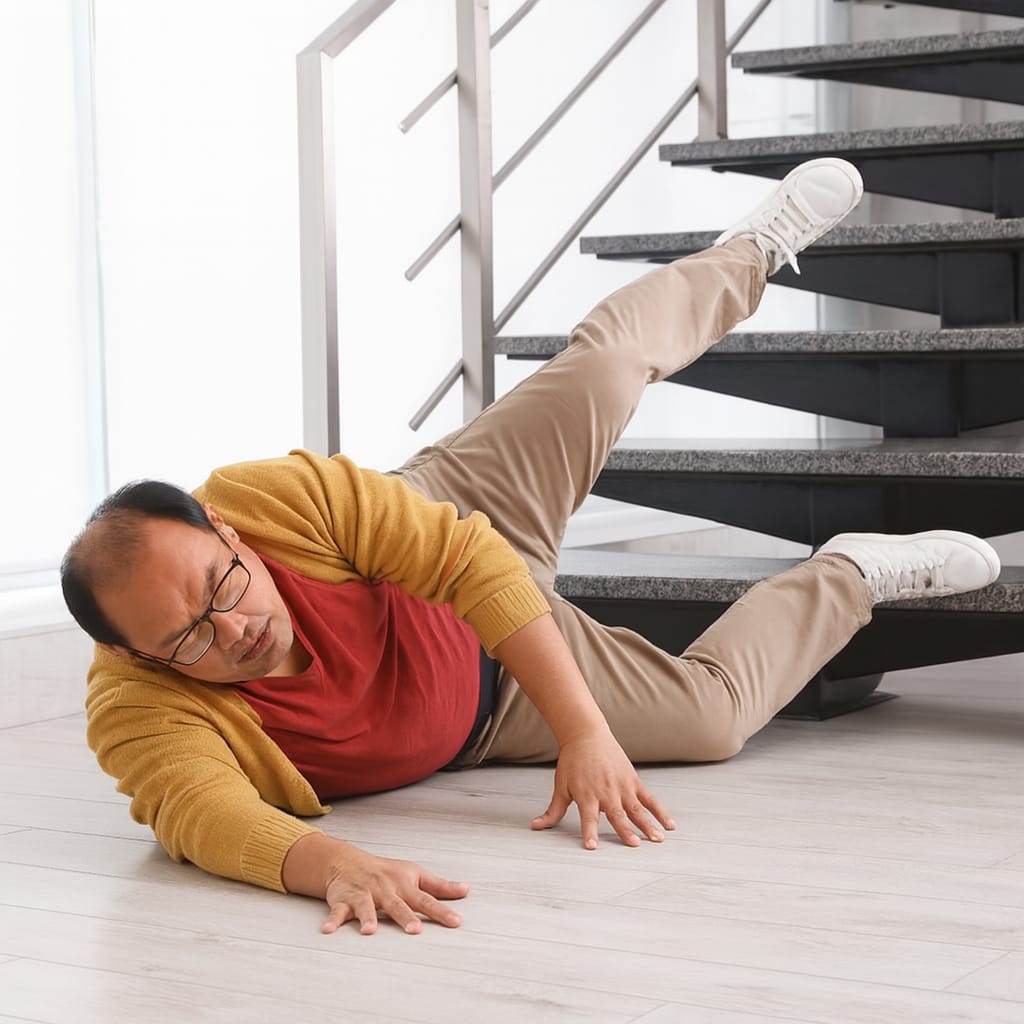
Falling from a hotel balcony or down a stairway is a terrifying experience that can change a trip in an instant. These accidents happen more often than you might think, with falls on stairs causing nearly 2,000 deaths annually in the United States alone. A loose railing, a poorly lit stairwell, or a slippery step can cause devastating injuries that affect you long after you check out.
Research shows that stairs may be the most common serious hazard we encounter in daily life, despite spending less than 1% of our day using them. Falls happen within seconds, and most people who lose their balance on stairs share one dangerous habit: they were not watching where they stepped. Small hazards like poor lighting and worn surfaces create big risks for hotel guests.
Hotels have a legal duty to protect guests from preventable dangers like these. When they fail to meet that duty, victims can pursue compensation. This guide explains how liability works in hotel balcony and stairway falls, what factors determine negligence, and what steps you can take to recover.
Under premises liability law, hotels must maintain a safe environment for all guests who visit their property. This legal duty covers balconies, stairwells, hallways, and any other area guests might use during their stay. When a hotel ignores known hazards or fails to perform regular maintenance, it can be held accountable for injuries that result.
Liability arises when a dangerous condition exists and the hotel knew about it or should have known about it. A guest who falls because of that condition may have grounds for a claim if the hotel had the chance to fix the problem but did not.
Proving liability means showing how the hotel’s failure to act directly led to your injuries. The law recognizes that paying guests have a right to expect safe conditions throughout the property.
When that expectation is violated, hotels can be held responsible for the harm they cause.
Building a successful premises liability case means proving several key elements that connect the hotel’s actions to your injuries. Each element plays a role in showing that the hotel should be held accountable for what happened:
Hotels owe a legal duty to maintain all guest areas in a reasonably safe condition. This duty extends to balconies, staircases, hallways, elevators, and walkways throughout the property. The hotel must inspect these areas regularly and fix any problems that could cause harm to guests.
A breach occurs when hotel staff or management fail to address or repair a known hazard. This can happen through direct action or inaction. For instance, ignoring multiple reports of a loose balcony railing shows a clear breach of duty. So does failing to clean up a spill, post warning signs about wet floors, or fix poor lighting in stairwells. Allowing damaged steps to go unfixed for days or weeks also qualifies as negligence under the law.
You must prove the unsafe condition directly caused your injury and that you suffered real harm. This means showing a clear link between the hazard and your fall. Medical records, photos, and witness statements help establish this connection.
Many hotel falls happen because of preventable hazards that property owners should have addressed before anyone got hurt. Recognizing these common causes helps you identify what went wrong and strengthens your ability to prove negligence.
Structural hazards top the list of dangerous conditions. Weak railings, unstable balconies, and stairs not built to code create serious risks for guests. When construction fails to meet safety standards, the results can be catastrophic. Maintenance failures like slippery floors, torn carpets, and loose tiles also cause frequent injuries.
Poor lighting creates hazards that are hard to see until you fall. Dim stairwells or outdoor areas obscure dangers that could be avoided with proper illumination. Design defects such as narrow steps or railing heights below safety standards put guests at risk every day. The lack of warning signs during cleaning or repairs leaves guests unaware of temporary hazards they might encounter.
Inadequate security can contribute to unsafe conditions too. Unlocked or poorly monitored stairwells may allow access to areas that are not maintained or safe for guest use. Each of these hazards represents a failure on the hotel’s part to protect visitors.
Taking the right steps after a fall protects both your health and your legal rights. The actions you take in the hours and days following the accident can make a significant difference in your ability to recover compensation later.
Get a full medical evaluation as soon as possible after your fall. Even if you feel fine, some injuries like head trauma or spinal damage may not show symptoms right away. Internal injuries can worsen over time if left untreated. A complete medical assessment creates an official record of your injuries and links them directly to the fall.
Notify hotel management right away and request a written incident report. This official documentation records what happened while the details are fresh. Ask for a copy for your records and make sure the report includes accurate information about how and where the fall occurred. Do not let the hotel downplay the incident or pressure you to say you are fine.
Take photos and videos of the area where you fell before anything changes or gets repaired. Capture details like broken handrails, puddles, uneven surfaces, or poor lighting that contributed to your accident. Get contact information for any witnesses who saw what happened, including other guests and hotel staff who responded to the incident.
Keep all medical records, hospital bills, and receipts related to your injury. Save any clothing or shoes you were wearing if they were damaged in the fall. Avoid signing any agreements or giving recorded statements to the hotel’s insurance company before speaking with a lawyer. Insurance adjusters may try to minimize your claim or get you to accept less than you deserve.
Multiple parties may share responsibility for your injuries depending on how the accident happened. Identifying all liable parties helps maximize the compensation you can recover:
Each responsible party may owe you compensation for the role they played in causing your fall.
Injury victims can pursue several types of damages to cover both financial losses and personal suffering.
Understanding what you can claim helps you see the full value of your case.
Economic damages cover measurable financial losses. This includes all medical expenses like hospitalization, surgery, physical therapy, and prescription medications. Lost wages compensate you for work time missed because of your injury. If your injuries prevent you from working at full capacity, you can also recover reduced earning capacity. Future medical costs account for ongoing treatment you will need as you continue to heal.
Non-economic damages address the personal impact of your injuries. Pain and suffering compensation recognizes the physical discomfort you endured because of the accident. Emotional distress accounts for psychological harm like anxiety, depression, or trauma related to the fall. Loss of enjoyment of life covers activities you can no longer participate in because of your injuries.
Punitive damages may apply in cases of gross negligence. If the hotel ignored repeated complaints about a dangerous balcony or showed complete disregard for guest safety, courts may award extra damages. These damages punish reckless behavior and discourage similar conduct by other property owners.
Professional legal support can make the difference between settling for less and receiving fair compensation. An experienced attorney knows how to build a strong case and negotiate with insurance companies.
Your lawyer will investigate the accident to identify all parties who should be held accountable. This includes reviewing hotel maintenance logs, surveillance footage, and safety inspection records. Working with engineers or building safety experts, your attorney can prove that negligence caused your fall. These professionals can testify about code violations or safety failures that contributed to the accident.
Your attorney handles all communication with the hotel’s insurance company. Insurance adjusters often try to minimize claims or get victims to settle quickly for less than their case is worth. Having a lawyer negotiate on your behalf protects you from these tactics. If the insurance company refuses to offer fair compensation, your lawyer can take your case to trial and present evidence to a jury.
A relaxing hotel stay should never end with a life-altering injury. If your fall happened because of a broken railing, poor lighting, or negligent maintenance, you deserve answers and accountability.
An experienced premises liability attorney can help you uncover what went wrong, identify who’s responsible, and pursue the compensation you need to recover physically, emotionally, and financially.
Contact Thompson Law today for a FREE CONSULTATION and get clear, compassionate guidance on your hotel injury case.





Thompson Law charges NO FEE unless we obtain a settlement for your case. We’ve put over $2.1 billion in cash settlements in our clients’ pockets. Contact us today for a free, no-obligation consultation to discuss your accident, get your questions answered, and understand your legal options.
State law limits the time you have to file a claim after an injury accident, so call today.