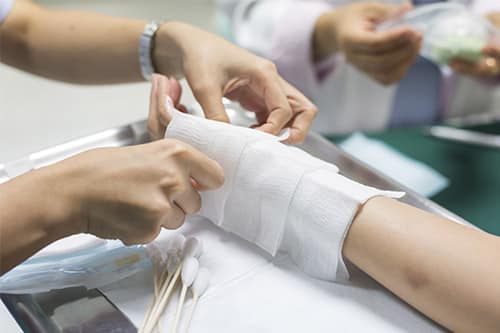
Getting burned at a restaurant isn’t something anyone expects, whether you’re a customer enjoying a meal or an employee working behind the counter. Yet studies show that burns are among the most common and preventable injuries in the food service industry…
According to the Centers for Disease Control and Prevention (CDC), restaurant-related burns account for roughly one-third of all occupational burns requiring hospitalization (specifically in Colorado and Minnesota), with grease burns making up nearly 90% of fryer-related cases. Many of these incidents involve young workers or unsafe kitchen practices, such as cleaning or moving hot equipment without proper safeguards.
More findings reinforce that the problem persists globally. A 2024 study published in the Journal of the Egyptian Public Health Association found that 77.3% of kitchen workers had suffered a work-related injury, and over half experienced skin burns during the previous year. The same study linked higher burn rates to long hours, poor ventilation, and a lack of safety training among kitchen staff.
For customers, restaurant negligence can also cause serious harm, from scalding beverages to malfunctioning appliances or exposed flames. Burns can leave lasting physical and emotional scars, often requiring expensive treatment and time away from work.
If your burn occurred because a restaurant failed to maintain safe conditions or train its staff properly, you may have the right to pursue compensation. This guide explains when restaurants can be held legally responsible for burn injuries, what steps you should take after the incident, and how an attorney can help protect your rights and recovery.
Restaurants have a legal obligation to protect everyone on their premises, and both customers and employees. Under premises liability law, businesses must maintain reasonably safe conditions and prevent foreseeable harm to patrons.
Meanwhile, workers’ compensation laws and employer negligence standards protect employees from unsafe workplace conditions.
Burns at restaurants typically happen because of unsafe conditions, inadequate training, or staff negligence. If the restaurant’s actions or failure to act directly caused your injury, you may have grounds for a legal claim. The key is whether the harm was preventable and whether the establishment fell short of its safety responsibilities.
Common situations that may support a legal claim include:
Understanding liability starts with knowing exactly what you must prove in a legal claim.
A successful burn injury lawsuit requires demonstrating that negligence occurred and that it directly caused your injuries. The legal framework differs slightly depending on whether you’re a customer pursuing a premises liability claim or an employee seeking damages beyond workers’ compensation.
Every restaurant owes a duty of care to the people on its property. For customers, this means maintaining a safe dining environment through proper service practices, well-maintained equipment, and clear warnings about hazards.
For employees, this duty extends to providing safe working conditions, proper training, appropriate safety equipment, and adherence to workplace safety regulations.
Negligence happens when a restaurant fails to meet the expected standard of care. For customers, breaches might include serving food or beverages at dangerously high temperatures without warning or leaving hazardous equipment accessible in dining areas.
For workers, breaches often involve failing to provide protective equipment, inadequate training on handling hot items, forcing employees to work with faulty equipment, or rushing staff in ways that create dangerous situations.
You must prove a direct link between the restaurant’s negligence and your injury. Medical records showing the severity and cause of your burn, witness testimony describing what happened, incident reports, and photos of the scene all help establish this connection.
The damages themselves must be measurable and documented. These include medical bills for emergency treatment and ongoing care, lost wages from time missed at work, and non-economic harm like physical pain, visible scarring, and emotional trauma from the incident.
Knowing what qualifies as negligence helps determine whether your situation warrants a claim.
Understanding how burn injuries typically occur in restaurants can help you recognize whether negligence played a role in your accident. These real-world scenarios illustrate when a restaurant may be legally responsible for harm.
Customer Injuries:
Employee Injuries:
Both Customers and Employees:
Each of these situations involves a failure to protect people from foreseeable harm. Once you’ve been injured, your immediate actions can make all the difference in your recovery and your claim.
The moments and hours following a burn injury are critical for both your health and any future legal action. Taking the right steps immediately can protect your well-being and preserve important evidence that may support your case.
Even burns that appear minor can worsen over time or become infected without proper care. Visit an emergency room or urgent care facility as soon as possible. A medical professional can assess the severity, provide treatment, and create records that document when and how the injury occurred. These records become essential evidence linking your burns to the restaurant incident.
Notify the restaurant manager or person in charge right away, even if you’re in pain or upset. Ask them to file a formal incident report and request a copy for your records. If you’re an employee, this step is particularly crucial for workers’ compensation claims. The report creates an official record that the accident happened on the premises and establishes the restaurant’s awareness of the situation.
Gather as much evidence as you can while the details are fresh and the scene remains unchanged. Take clear photos of your injuries from multiple angles, capturing the extent of redness, blistering, or damage.
Photograph the hazard that caused your burn, whether it’s equipment, a spilled liquid, or an unsafe workspace setup. Include wide shots showing the surrounding area.
Save all documentation related to the incident. Keep your medical receipts, hospital discharge papers, prescription records, and any bills from that day. If your clothing or personal items were damaged by the burn, preserve them as evidence. Collect contact information from anyone who witnessed the accident, as their statements may corroborate your version of events.
Stay as calm as possible and avoid accusatory language with restaurant staff or management. Don’t discuss who you think is at fault or make statements about the severity of your injuries to anyone at the scene. Insurance adjusters or restaurant representatives may try to contact you soon after the incident, and politely decline to give recorded statements or sign any documents until you’ve consulted with an attorney.
Once you’ve taken care of your immediate needs, the next step is to understand your legal options.
Going through the legal aftermath of a burn injury can feel overwhelming when you’re already dealing with pain, medical appointments, and recovery. An experienced personal injury attorney takes on the complex legal work so you can focus on healing.
A lawyer will start by evaluating whether negligence occurred and identifying all potentially responsible parties. This may include the restaurant itself, individual managers, equipment manufacturers, or property owners.
For employees, an attorney can determine whether you qualify for workers’ compensation benefits and whether you have grounds for a separate personal injury lawsuit based on extreme negligence or third-party liability.
Attorneys have the resources and legal authority to collect and preserve critical evidence. This includes obtaining surveillance footage from the restaurant before it’s deleted, reviewing maintenance records for equipment involved in your injury, securing staff training documents that may reveal safety protocol violations, and examining workplace safety inspection reports.
Calculating the full value of your claim requires expertise in assessing both current and future damages. Your lawyer will account for immediate medical costs, ongoing treatment needs, potential scarring requiring cosmetic procedures, lost income during recovery, and the emotional toll of your trauma.
Insurance companies often try to minimize payouts or deny claims entirely. Your attorney handles all communication with the restaurant’s insurance carrier and legal team, protecting you from tactics designed to undermine your case. They’ll negotiate aggressively for a fair settlement and, if necessary, take your case to court to fight for the compensation you deserve.
Many personal injury lawyers work on contingency, which means you pay no upfront fees. They only receive payment if they successfully recover compensation on your behalf, typically as a percentage of your settlement or verdict.
Legal action can’t undo what happened, but it can help you recover the financial support you need to heal and move forward.
When negligence causes a burn injury, the law allows you to seek compensation for all the ways the accident has affected your life. The type and amount of compensation available depends on whether you’re filing a workers’ compensation claim, a personal injury lawsuit, or both.
These cover your tangible financial losses with specific dollar amounts. Medical expenses include emergency room visits, ambulance transportation, hospital stays, burn unit care, surgery for severe injuries, prescription medications, and ongoing wound care.
If your burns require future treatment like skin grafts, physical therapy, or reconstructive procedures, those projected costs are also recoverable.
Lost wages compensate you for work time missed during initial treatment and recovery. If your injury prevents you from returning to your job at full capacity, forces a career change, or results in permanent disability, you may recover compensation for reduced earning potential over your lifetime.
These address the intangible but very real harm you’ve suffered. Physical pain and suffering account for the immediate agony of the burn and discomfort during healing. Emotional distress covers anxiety, depression, or post-traumatic stress triggered by the accident. Permanent scarring or disfigurement, especially on visible areas like the face, hands, or arms, can profoundly impact self-esteem and social interactions.
Some burns also cause loss of enjoyment in activities you once loved, whether due to physical limitations or emotional trauma associated with your injury.
In cases involving gross negligence or willful misconduct, courts may award punitive damages beyond compensation for your actual losses. These are meant to punish the restaurant for egregious behavior and deter similar conduct in the future. Examples might include knowingly forcing employees to work with dangerously hot equipment, serving food at extreme temperatures despite repeated complaints, or deliberately ignoring serious safety violations.
Understanding your rights is the first step toward recovery, but the next step is taking action.
Whether you were dining out or working your shift, a burn injury should never be dismissed as just part of the job or an unavoidable accident. If you were burned at a restaurant, you don’t have to carry the burden alone. The law allows you to hold negligent businesses accountable and pursue compensation for your suffering, medical costs, and lost time.
Thompson Law can help you understand your legal rights, gather evidence, and build a strong case while you focus on healing. Every burn injury deserves to be taken seriously, and every victim deserves justice.
Contact Thompson Law today for a FREE CONSULTATION to discuss your restaurant burn injury claim and learn how we can help you move forward.





Thompson Law charges NO FEE unless we obtain a settlement for your case. We’ve put over $2.1 billion in cash settlements in our clients’ pockets. Contact us today for a free, no-obligation consultation to discuss your accident, get your questions answered, and understand your legal options.
State law limits the time you have to file a claim after an injury accident, so call today.